What is EPG? The electronic program guide, explained (2026)
An EPG is the on-screen guide that shows what is on now and next across your channels. Here is how it works, where XMLTV fits, and how to get it right in an IPTV player.
EPG stands for Electronic Program Guide, the on-screen schedule that shows what is on now and what is coming up next, across all your channels. It is the difference between a wall of channel names and an actual television you can plan around.
This explains what an EPG is, where the data comes from, and how to get a clean one working in an IPTV player.
What an EPG does
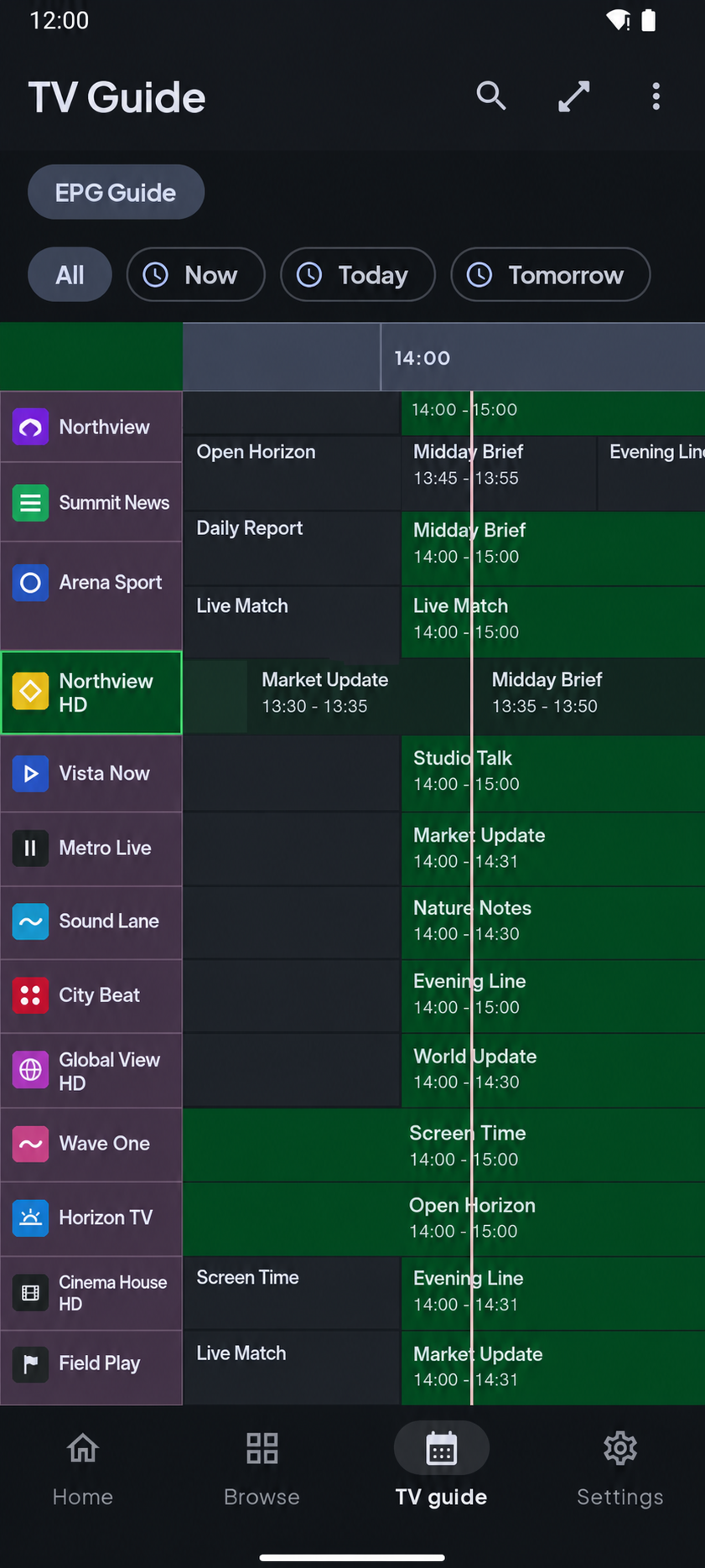
A channel list tells you what you can watch. An EPG tells you when. For each channel it lays out the day's schedule: the program on now, how long is left, and what follows. A good guide turns scrolling into deciding. You can see at a glance what is worth your evening.
Beyond the grid itself, an EPG unlocks small conveniences that add up:
- Now and next labels on every channel.
- Reminders for a program that starts later.
- Catch-up, where supported, so you can jump back to something that already aired. We cover that in our guide on catch-up TV.
Where the data comes from: XMLTV
Guide data usually arrives in a format called XMLTV, a structured file, or a link to one, that lists programs and times for each channel. It is separate from your channel playlist. Think of it as two layers: your M3U or Xtream source provides the channels, and the XMLTV guide describes what plays on them.
Some sources bundle the two. An Xtream Codes account, for instance, often carries its guide with it, so you get an EPG without adding anything extra. A plain M3U playlist usually needs its XMLTV link attached separately, a one-time step covered in our M3U setup guide.
The matching problem
Here is the part players quietly get right or wrong. Your playlist and your XMLTV guide are written by different people, so a channel can be named one way in the playlist and another in the guide. When they do not line up, you get channels with no schedule, a guide full of blanks.
A good player matches the two for you, pairing each channel to its guide data even when the names differ, and keeps the guide in sync so tomorrow's schedule is there when tomorrow arrives. Streamblix does both automatically: it smart-matches your guide to your channels and can refresh it on a schedule, so the grid stays populated without you tending it.
What a good EPG feels like
- It loads quickly and does not leave you staring at a spinner.
- It is complete, with few or no channels missing their schedule.
- It stays current, refreshing on its own.
- It is easy to read, with a clear now-and-next and a timeline you can scan.
Streamblix was built with the guide as a first-class part of the experience, not an afterthought bolted on. If the schedule matters to how you watch, that is where a considered player earns its place.
Getting a clean guide
If your guide is patchy, the fix is usually one of two things: attach the right XMLTV link, or let the player re-match channel names. Both take moments in Streamblix, which is free on Google Play. Add your source, attach or confirm the guide, and let it fill in. If your guide loads but has gone stale, our guide on how to update the EPG walks through the fix.
Frequently asked questions
- What does EPG mean?
- EPG stands for Electronic Program Guide, the on-screen schedule in an IPTV or TV app that shows what is on now and next across your channels.
- What does EPG stand for on TV?
- On a TV or IPTV app, EPG stands for Electronic Program Guide. It is the guide that shows the schedule for each channel, so you can see what is on now, what is next, and what plays later today.
- What is XMLTV?
- XMLTV is the common format for program-guide data. It is a structured file, or a link to one, listing programs and times for each channel, and it is separate from your channel playlist.
- Why are some channels missing their guide?
- Because the channel names in your playlist and your XMLTV guide do not match. A player that smart-matches the two, like Streamblix, pairs them automatically so the schedule fills in.
Try Streamblix
A considered IPTV player for Android. Bring your own source and it makes it watchable, fast, and free of ads in playback. No account to begin.